Call Us

The summit night on Kilimanjaro is the experience that every other day on the mountain is building toward — and it is unlike anything else in trekking. Cold, dark, relentless, and ultimately transcendent. No amount of preparation fully prepares you for the reality of it. But knowing what to expect removes the fear of the unknown and replaces it with readiness.
Most routes begin the summit push between midnight and 1am. The early start is deliberate — it allows you to reach the summit crater rim around sunrise, avoids the dangerous afternoon cloud and weather build-up on the upper mountain, and gives maximum time for a safe descent in daylight.
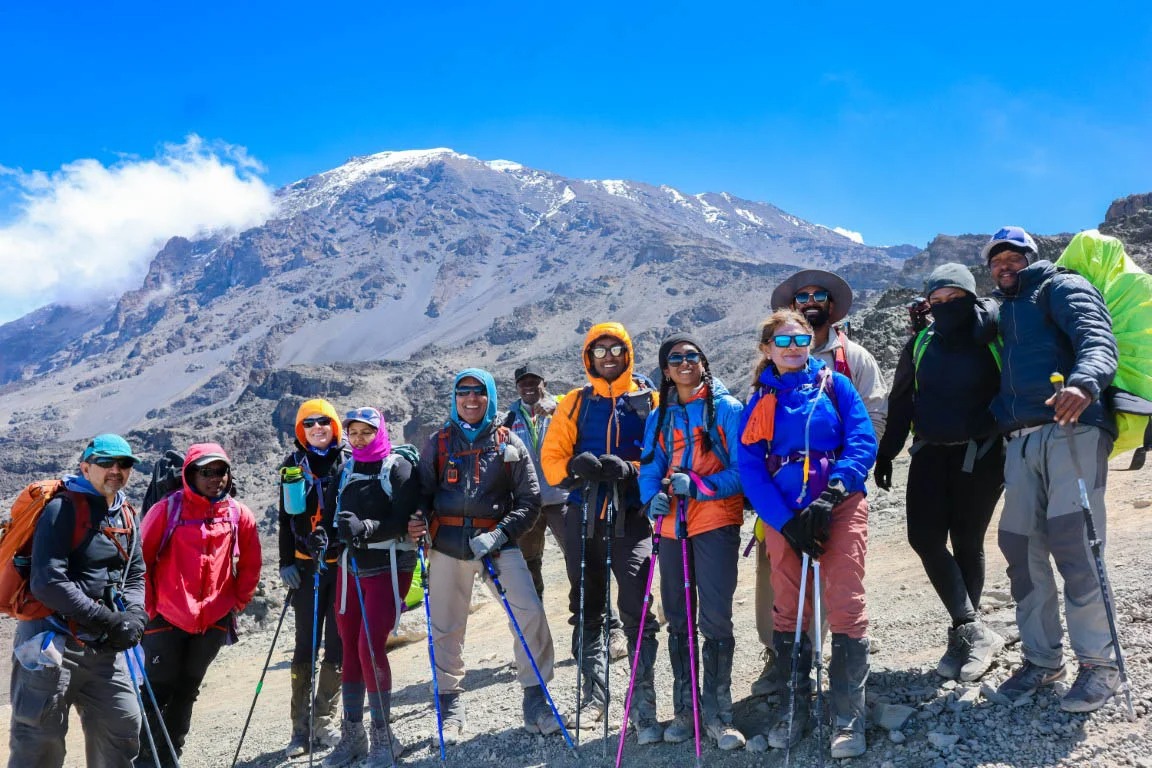
Cold. Very cold. Summit temperatures regularly reach -10°C to -20°C with wind chill on the exposed upper slopes. This is why your down jacket, heavyweight gloves, balaclava, and waterproof shell are non-negotiable. The terrain from base camp to the crater rim is steep volcanic scree — loose, chunky, and relentless underfoot. Your headlamp lights the circle of rock immediately ahead. The darkness is complete beyond it.
The summit night is where Kilimanjaro reveals its true character. At 5,000 metres, in the dark, in the cold, with legs that have already walked for five days — the mountain asks whether you really want this. The answer is found not in your legs or your lungs but in your mind. Move slowly. Breathe deeply. Count steps. Focus on the circle of light from your headlamp. The rim is getting closer. It is always getting closer.
Stella Point (5,756m) is the first point on the crater rim and is counted as an official summit on the Machame and other southern circuit routes. Many climbers experience a surge of emotion and energy on reaching Stella Point. From here, the final 139 metres of ascent along the crater rim to Uhuru Peak takes another 45 to 90 minutes depending on pace and conditions.
The famous yellow sign at Uhuru Peak reads: "Congratulations — You are now at Uhuru Peak, Tanzania. 5895m AMSL. Africa's Highest Point. World's Largest Free Standing Mountain. One of World's Largest Volcanoes." The photograph taken here is the one that will hang on your wall for the rest of your life. The feeling — exhaustion, elation, disbelief, and fierce pride in equal measure — is indescribable.
The descent from the summit is long and hard on the knees. KILIPARK guides manage pace carefully — it is important to descend to lower altitude as quickly as safely possible, but rushing the scree descent risks injury. Trekking poles are enormously valuable on the way down. Most climbers reach camp 5 to 7 hours after leaving for the summit, eat their first real meal in 12 hours, and sleep the deepest sleep of their lives.
KILIPARK – Tanzania Safari & Kilimanjaro Trekking Experts
Call Us
Copyright © KILIPARK | All Rights Reserved